




THE COMPANY > ADPO - Antwerp Distribution and Product Operations is a family-owned liquid logistics service provider – ADPO operates two terminals in the Port of Antwerp-Bruges – Tank storage is the company’s core activity, complemented by integrated value-added services – Integrated services include warehousing, drumming, ISO-tank parking, tank cleaning, and transport – ADPO is a global leader in the operation of stainless steel tanks for specialty chemicals – Integrated services tailored to specialty chemicals is a key differentiator – Company originated from grain trading “Natie” and shifted its focus to the chemical industry in the 1980s – ADPO is a unique niche player offering specialized, integrated services within a single terminal – This broad range of services requires a wide variety of skills and expertise
INTEGRATED SERVICES > ADPO offers a one-stop-concept for liquid logistics of the chemical industry – Integrated services are at the core of ADPO’s offering, complemented by solutions such as multimodality – ADPO has implemented an intra-port barging solution to reduce congestion in import container flows – Intra-port barge service is also open to road hauliers, helping them avoid long queues at deep-sea terminals – In 2025, the solution shifted 10,000 containers from road to water, reducing carbon emissions – Decarbonizing customers’ supply chains is a key part of ADPO’s mission – ADPO supports the energy transition by enabling the handling of new and circular feedstocks – ADPO’s key differentiator is combining liquid logistics expertise with integrated services on a single terminal – Expertise requires a wide range of skills and continuous in-house training – Due to high specialization, ADPO does not rely on temporary labor – The workforce is evenly split between white-collar and blue-collar employees – Since the chemical sector crisis, retaining workforce has become easier
CHEMICAL SECTOR > Specialization brings risk, but large customers with broad portfolios and long-term contracts reduce it – Revenue combines a fixed component from tank storage and a variable component from handling activities – Market imbalances can be anticipated by offering complementary services – The survival of the European chemical industry will impact the liquid logistics – Chemical producers in China and the US can produce at a lower cost than European companies – A declining European chemical industry would reduce flows, employment, and purchasing power – Knowledge remains Europe’s key asset in specialty chemicals, complemented by new technologies – Energy prices will be decisive for the survival of the European chemical sector – Europe should address energy pricing as a single market
CUSTOMERS > US, Middle East, and Asia producers account for 70% of volumes – 30% comes from European producers, mainly via rail, with the remainder by truck – Outbound distribution is split between barges (40%), tank containers by truck (40%), and rail (20%) – ADPO’s terminal has six rail tracks with capacity for 45 rail tank cars – Imports of chemicals are rapidly overtaking exports from European production – New customer potential comes from technologically advanced producers in Asia and the Middle East
CONTRACTING > ADPO participates in tenders and also approaches customers directly – In tenders, ADPO differentiates itself through soft values such as sustainability – ADPO pioneers sustainability investments, including parabolic mirrors for emission-free tank heating – ADPO aims to be a frontrunner in sustainability with LNG trucks, solar energy, and a 4 MW battery park – The company builds ecosystem partnerships to jointly reduce carbon footprints – Contract duration typically ranges from 1 to 3 years, with top customers reaching 5 to 10 years – Equipment can be tailored or co-created when contract duration allows – Chemical producers want to increase on-site storage to reduce transportation needs – More circularity will create synergies between producers and logistics service providers
INNOVATION > In the specialty chemicals industry, smaller LSPs can pilot and pioneer innovation – Smaller LSPs are more agile in driving innovation – As a family-owned company with a long-term vision, ADPO places strong emphasis on innovation – Automation and digitalization only partly reduce workforce shortages, as they require different skilled people – ADPO employs an equal share of blue- and white-collar workers – Digital skills are increasingly required, including for blue-collar roles
PERFORMANCE > Zero incidents and zero injuries are the top priority, followed by minimal environmental impact – Truck turnaround time between gate-in and gate-out is a key operational KPI – If turnaround exceeds three hours, ADPO covers demurrage costs or even tariffs can be adjusted – On-time delivery is the most important KPI for customers – Potential truck delays are proactively managed by informing customers when a timeslot is missed by their haulier – ADPO aims to expand data-driven services to provide customers with greater supply chain visibility – An AI framework is being developed to provide real-time customer information – Profit margins are sufficient to sustain continued investment in innovation – A KPI dashboard monitors short- and long-term sustainability and supports Scope 3 emissions reporting – Subcontractors are audited and monitored as part of ADPO’s Scope 3 emissions
RESILIENCE > Liquid logistics was impacted by several crises, including the Ever Given, Houston port issues, Houthi attacks, and US tariffs – Disruptions increased sea freight rates and triggered supply chain redesigns – Some Chinese producers rerouted flows via Europe before shipping to the US to mitigate tariffs – Since COVID, chemical producers have increased inventories in Europe to ensure continuous supply – Producers continuously evaluate locating feedstock closer to production and end stock closer to consumers – Supply chain redesigns create opportunities for LSPs to flexibly organize, accommodate, and consolidate chemical flows
THE FUTURE > How can the chemical industry meet the EU Green Deal targets while remaining competitive – Green hydrogen may increase dependence on the Middle East, challenging Europe’s ambition for self-sufficiency – A decline in the European chemical industry would reduce both feedstock imports and product exports – Energy prices in the next two to three years will be critical for the sector’s survival – By 2040, truck turnaround times on the terminal should be significantly reduced through automation and digitalization – The operator of the future will require stronger digital and IT skills – E-fuels, biofuels, and circular feedstocks will replace traditional fuels but require similar logistics services – Hydrogen and ammonia storage require different and more costly infrastructure – Green methanol could offer opportunities for the European industry – Road transport will rely on a mix of energy sources, including electrification, LNG, and hydrogen – ADPO has a strong focus on LNG for transport – LSPs will need to become more flexible, with a stronger focus on intermodal solutions – The key recommendation is to embrace technology and invest in sustainability and multimodality
THE COMPANY > ADPO - Antwerp Distribution and Product Operations is a family-owned liquid logistics service provider – ADPO operates two terminals in the Port of Antwerp-Bruges – Tank storage is the company’s core activity, complemented by integrated value-added services – Integrated services include warehousing, drumming, ISO-tank parking, tank cleaning, and transport – ADPO is a global leader in the operation of stainless steel tanks for specialty chemicals – Integrated services tailored to specialty chemicals is a key differentiator – Company originated from grain trading “Natie” and shifted its focus to the chemical industry in the 1980s – ADPO is a unique niche player offering specialized, integrated services within a single terminal – This broad range of services requires a wide variety of skills and expertise
INTEGRATED SERVICES > ADPO offers a one-stop-concept for liquid logistics of the chemical industry – Integrated services are at the core of ADPO’s offering, complemented by solutions such as multimodality – ADPO has implemented an intra-port barging solution to reduce congestion in import container flows – Intra-port barge service is also open to road hauliers, helping them avoid long queues at deep-sea terminals – In 2025, the solution shifted 10,000 containers from road to water, reducing carbon emissions – Decarbonizing customers’ supply chains is a key part of ADPO’s mission – ADPO supports the energy transition by enabling the handling of new and circular feedstocks – ADPO’s key differentiator is combining liquid logistics expertise with integrated services on a single terminal – Expertise requires a wide range of skills and continuous in-house training – Due to high specialization, ADPO does not rely on temporary labor – The workforce is evenly split between white-collar and blue-collar employees – Since the chemical sector crisis, retaining workforce has become easier
CHEMICAL SECTOR > Specialization brings risk, but large customers with broad portfolios and long-term contracts reduce it – Revenue combines a fixed component from tank storage and a variable component from handling activities – Market imbalances can be anticipated by offering complementary services – The survival of the European chemical industry will impact the liquid logistics – Chemical producers in China and the US can produce at a lower cost than European companies – A declining European chemical industry would reduce flows, employment, and purchasing power – Knowledge remains Europe’s key asset in specialty chemicals, complemented by new technologies – Energy prices will be decisive for the survival of the European chemical sector – Europe should address energy pricing as a single market
CUSTOMERS > US, Middle East, and Asia producers account for 70% of volumes – 30% comes from European producers, mainly via rail, with the remainder by truck – Outbound distribution is split between barges (40%), tank containers by truck (40%), and rail (20%) – ADPO’s terminal has six rail tracks with capacity for 45 rail tank cars – Imports of chemicals are rapidly overtaking exports from European production – New customer potential comes from technologically advanced producers in Asia and the Middle East
CONTRACTING > ADPO participates in tenders and also approaches customers directly – In tenders, ADPO differentiates itself through soft values such as sustainability – ADPO pioneers sustainability investments, including parabolic mirrors for emission-free tank heating – ADPO aims to be a frontrunner in sustainability with LNG trucks, solar energy, and a 4 MW battery park – The company builds ecosystem partnerships to jointly reduce carbon footprints – Contract duration typically ranges from 1 to 3 years, with top customers reaching 5 to 10 years – Equipment can be tailored or co-created when contract duration allows – Chemical producers want to increase on-site storage to reduce transportation needs – More circularity will create synergies between producers and logistics service providers
INNOVATION > In the specialty chemicals industry, smaller LSPs can pilot and pioneer innovation – Smaller LSPs are more agile in driving innovation – As a family-owned company with a long-term vision, ADPO places strong emphasis on innovation – Automation and digitalization only partly reduce workforce shortages, as they require different skilled people – ADPO employs an equal share of blue- and white-collar workers – Digital skills are increasingly required, including for blue-collar roles
PERFORMANCE > Zero incidents and zero injuries are the top priority, followed by minimal environmental impact – Truck turnaround time between gate-in and gate-out is a key operational KPI – If turnaround exceeds three hours, ADPO covers demurrage costs or even tariffs can be adjusted – On-time delivery is the most important KPI for customers – Potential truck delays are proactively managed by informing customers when a timeslot is missed by their haulier – ADPO aims to expand data-driven services to provide customers with greater supply chain visibility – An AI framework is being developed to provide real-time customer information – Profit margins are sufficient to sustain continued investment in innovation – A KPI dashboard monitors short- and long-term sustainability and supports Scope 3 emissions reporting – Subcontractors are audited and monitored as part of ADPO’s Scope 3 emissions
RESILIENCE > Liquid logistics was impacted by several crises, including the Ever Given, Houston port issues, Houthi attacks, and US tariffs – Disruptions increased sea freight rates and triggered supply chain redesigns – Some Chinese producers rerouted flows via Europe before shipping to the US to mitigate tariffs – Since COVID, chemical producers have increased inventories in Europe to ensure continuous supply – Producers continuously evaluate locating feedstock closer to production and end stock closer to consumers – Supply chain redesigns create opportunities for LSPs to flexibly organize, accommodate, and consolidate chemical flows
THE FUTURE > How can the chemical industry meet the EU Green Deal targets while remaining competitive – Green hydrogen may increase dependence on the Middle East, challenging Europe’s ambition for self-sufficiency – A decline in the European chemical industry would reduce both feedstock imports and product exports – Energy prices in the next two to three years will be critical for the sector’s survival – By 2040, truck turnaround times on the terminal should be significantly reduced through automation and digitalization – The operator of the future will require stronger digital and IT skills – E-fuels, biofuels, and circular feedstocks will replace traditional fuels but require similar logistics services – Hydrogen and ammonia storage require different and more costly infrastructure – Green methanol could offer opportunities for the European industry – Road transport will rely on a mix of energy sources, including electrification, LNG, and hydrogen – ADPO has a strong focus on LNG for transport – LSPs will need to become more flexible, with a stronger focus on intermodal solutions – The key recommendation is to embrace technology and invest in sustainability and multimodality

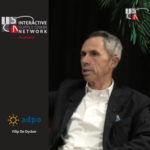
Filip De Dycker is Managing Director and shareholder of ADPO Group. After he graduated as Master of Business Administration at University of Antwerp, Filip became Managing Director of the familiy-owned company ADPO, run by his father. Since 2019, Filip is also board member of Essenscia, the federation representing the chemical industry.